Breathing Room (AI Financial Companion)
Exploring how AI can reduce financial overwhelm and drive action
Company
Own project
Language
English
Date
2025 – Present
Project Overview
Breathing Room is a conversational product designed to help people take action on their finances.
Instead of dashboards and tracking, it focuses on something most financial tools ignore: the moment where people feel stuck, overwhelmed, or unsure what to do next.
The goal is not simply to show financial information, but to help users understand their situation, prioritise decisions, and take meaningful next steps with greater clarity and confidence
The challenge
Most financial products assume users are already ready to engage.
In practice, many people:
feel overwhelmed by financial information
avoid decisions altogether
struggle to prioritise what matters most
disengage before taking action
Existing tools often provide visibility, but not guidance.
Through early research and experimentation, I became increasingly interested in the gap between knowing and acting — particularly how financial stress, cognitive overload, and uncertainty reduce people’s ability to engage with otherwise useful products.
The project reframed financial UX as a behavioural and decision-making problem rather than simply an information problem.
Process / Explorations
The work started by treating this as a behavioural problem rather than a feature gap.
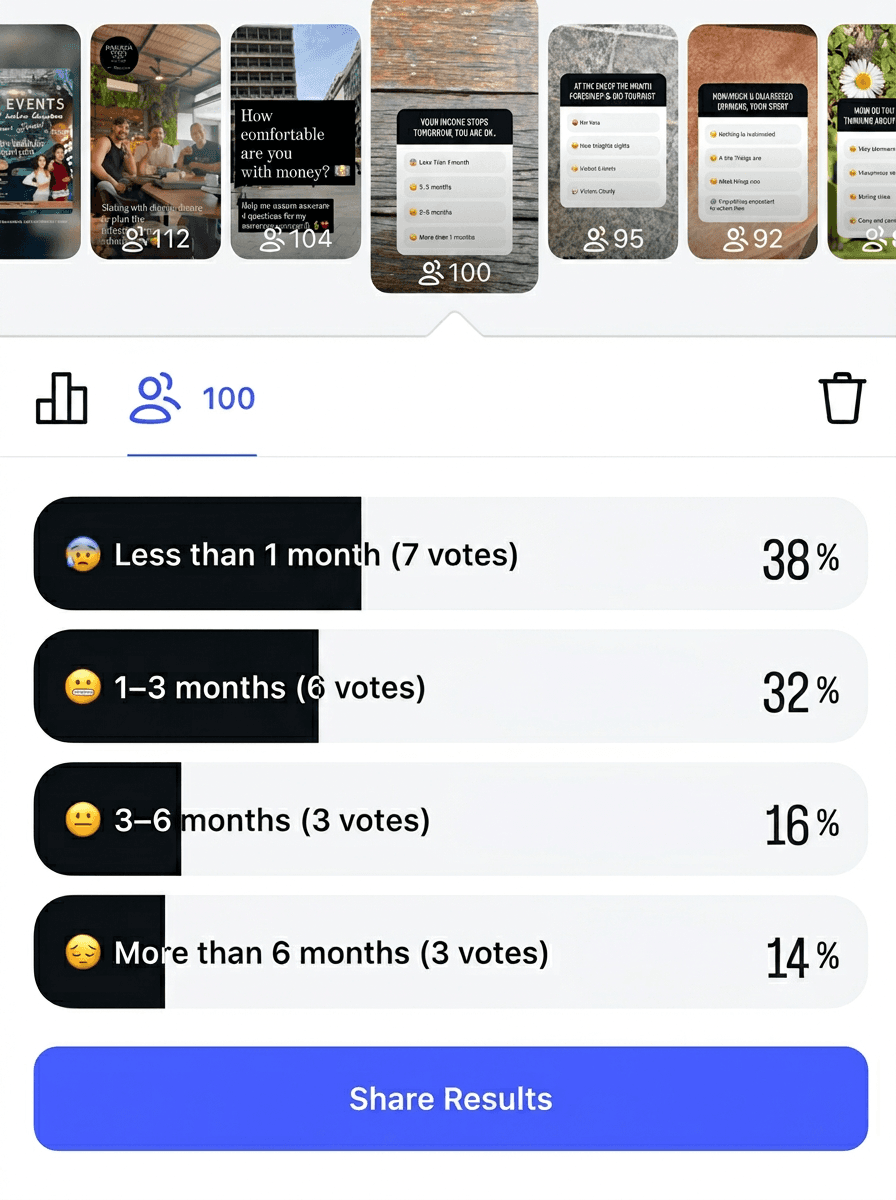
Through early research and testing, a few patterns became clear:
People feel overwhelmed when shown too much at once
Financial language increases anxiety rather than clarity
A lack of prioritisation leads to inaction
I mapped this into a simple progression model:
overwhelmed → aware → stabilising → growing
From there, the focus shifted to designing interactions that move users forward one step at a time.
Prototypes were built using tools like Lovable and Tally to test:
guided diagnostics
adaptive questioning
simplified outputs instead of full dashboards
The key question throughout was:
What does the user need right now to move forward?
Approach
The work started by treating this as a behavioural problem rather than a feature problem.
Early exploration showed a few recurring patterns:
too much information created paralysis rather than clarity
financial language often increased anxiety and avoidance
users responded better to guided progression than open-ended analysis
From this, I developed a simple progression model:
overwhelmed → aware → stabilising → growing
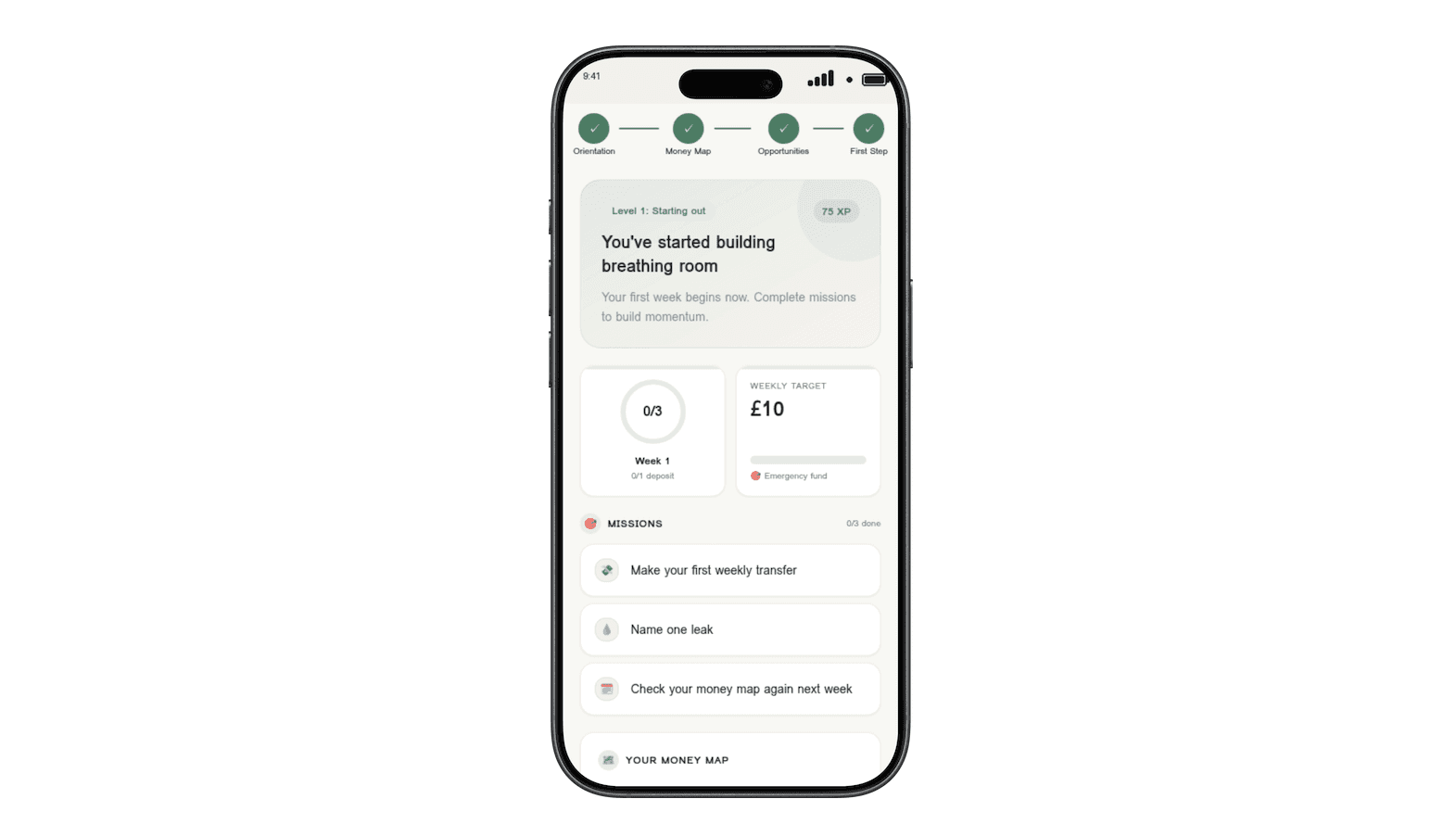
Using tools like Lovable and Tally, I built and tested prototypes around guided diagnostics, adaptive questioning, conversational flows, and action-oriented outputs instead of traditional dashboards.
One principle guided the work throughout: What does the user need right now to move one step forward?
Design
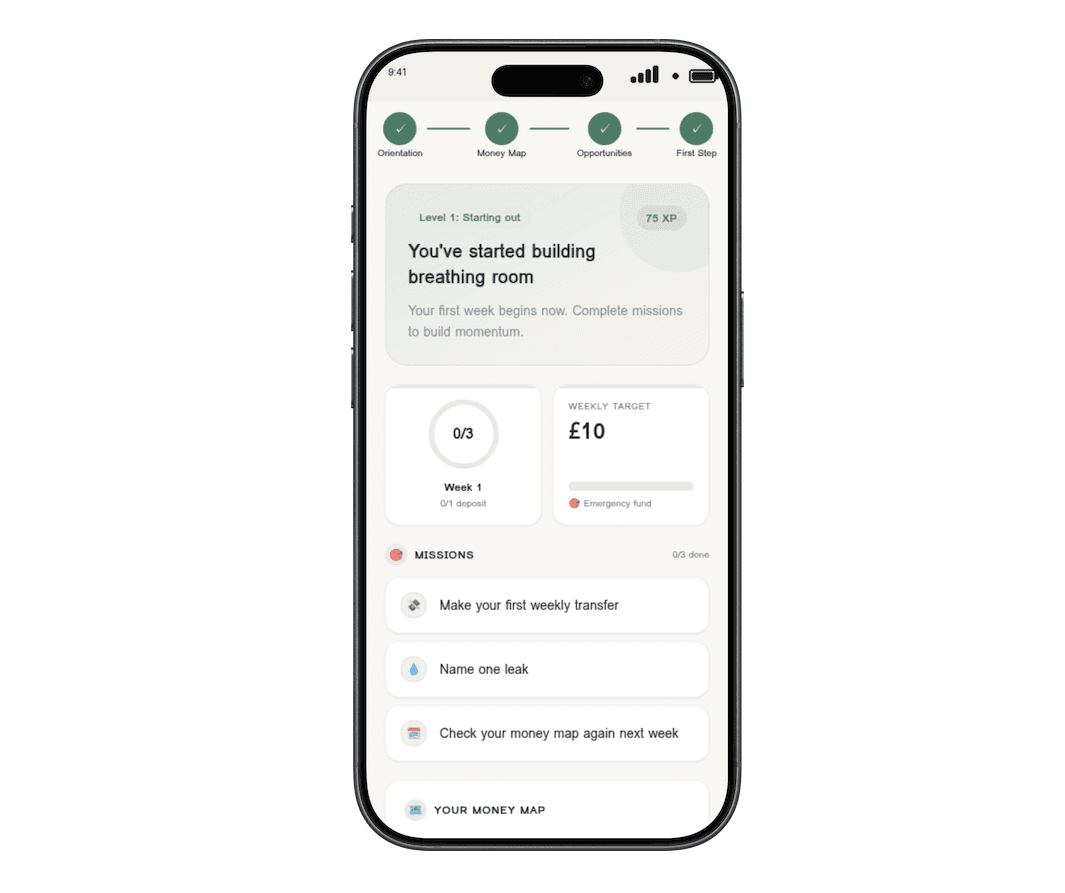
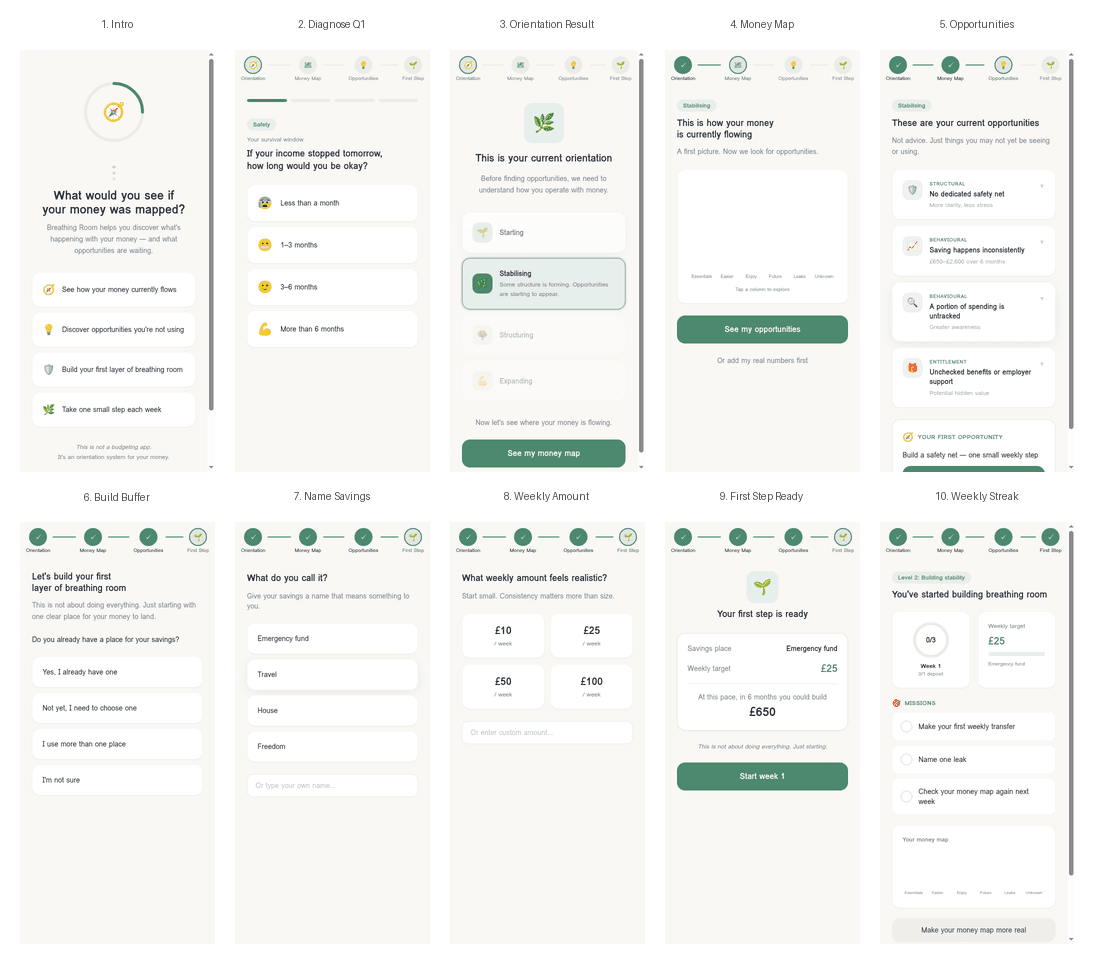
The experience uses conversation and progressive guidance to reduce overwhelm and support decision-making.
Instead of exposing users to full financial complexity upfront, the system prioritises what matters most in the moment through:
one step at a time interactions
clear and emotionally neutral language
adaptive guidance based on context and readiness
focused next actions instead of full financial analysis
The goal is to create a financial experience that feels supportive, actionable, and easier to engage with consistently.
Impact / Status
Built and tested early working prototypes
Validated strong preference for guided financial interaction over traditional dashboards
Identified key behavioural barriers reducing financial action and engagement
Ongoing exploration as part of MBA research into behavioural design and AI-enabled financial experiences
The project explores how AI can act not only as an information layer, but as a behavioural support layer that helps people become ready to engage with financial decisions more effectively.