Cancer Diagnosis: From 12 Weeks to 6 Days
Reducing diagnosis time from 12 weeks to 6 days through service redesign
Company
Oslo University Hospital (OUS)
Language
Norwegian
Date
2013–2014
Project Overview
Breast Cancer Diagnosis Journey
Oslo University Hospital asked us to help reduce the time it took for women to get a breast cancer diagnosis, and to improve the experience during what is often one of the most frightening periods of their lives. At the time, women could wait up to 12 weeks from referral to diagnosis, a wait filled with uncertainty, fear, and very little information.
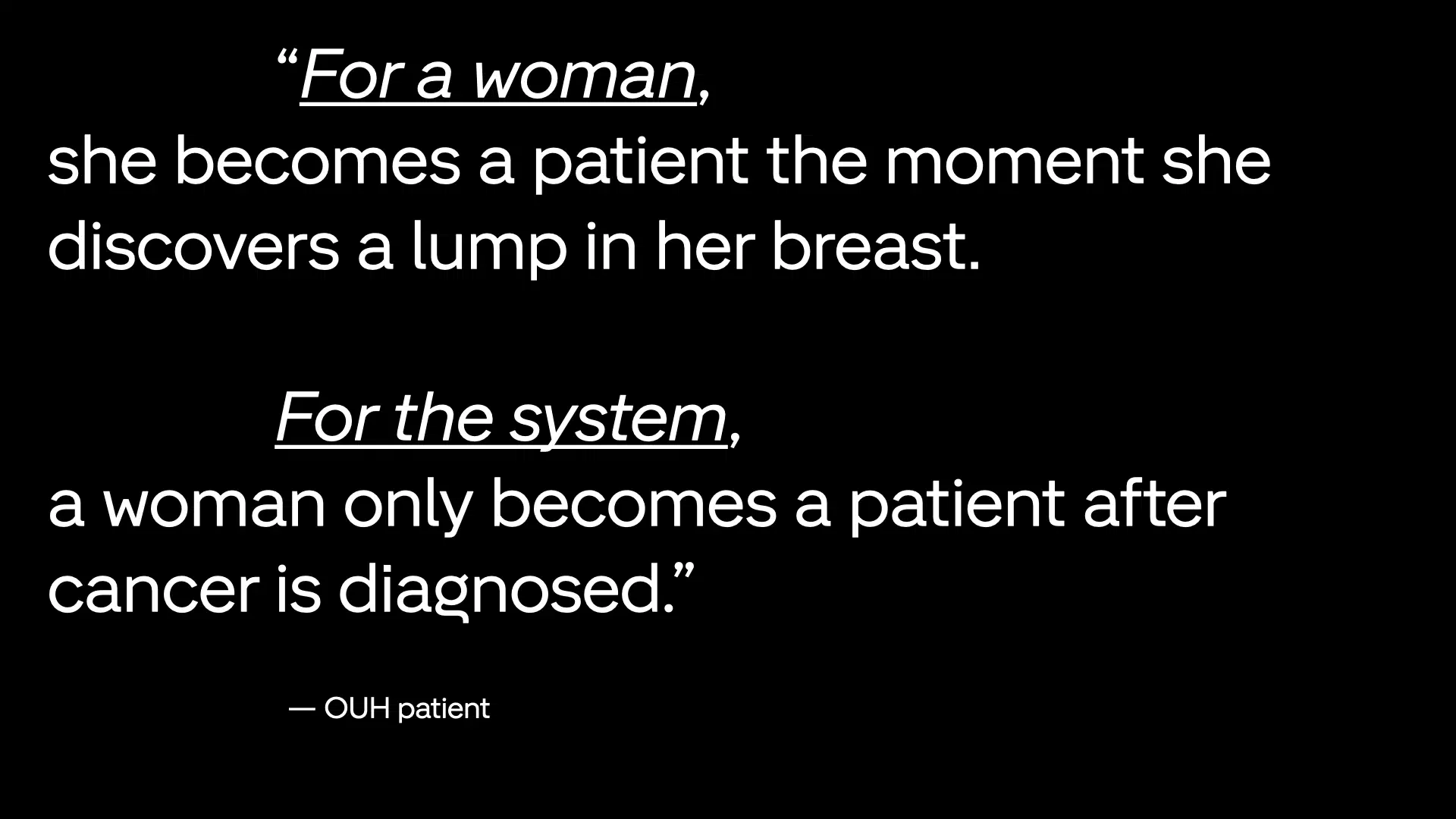
Early on, we uncovered a simple but powerful insight. For a woman, she becomes a patient the moment she finds a lump. For the system, she only becomes a patient once cancer is confirmed. That gap shaped everything, from how care was organised to how waiting was experienced.
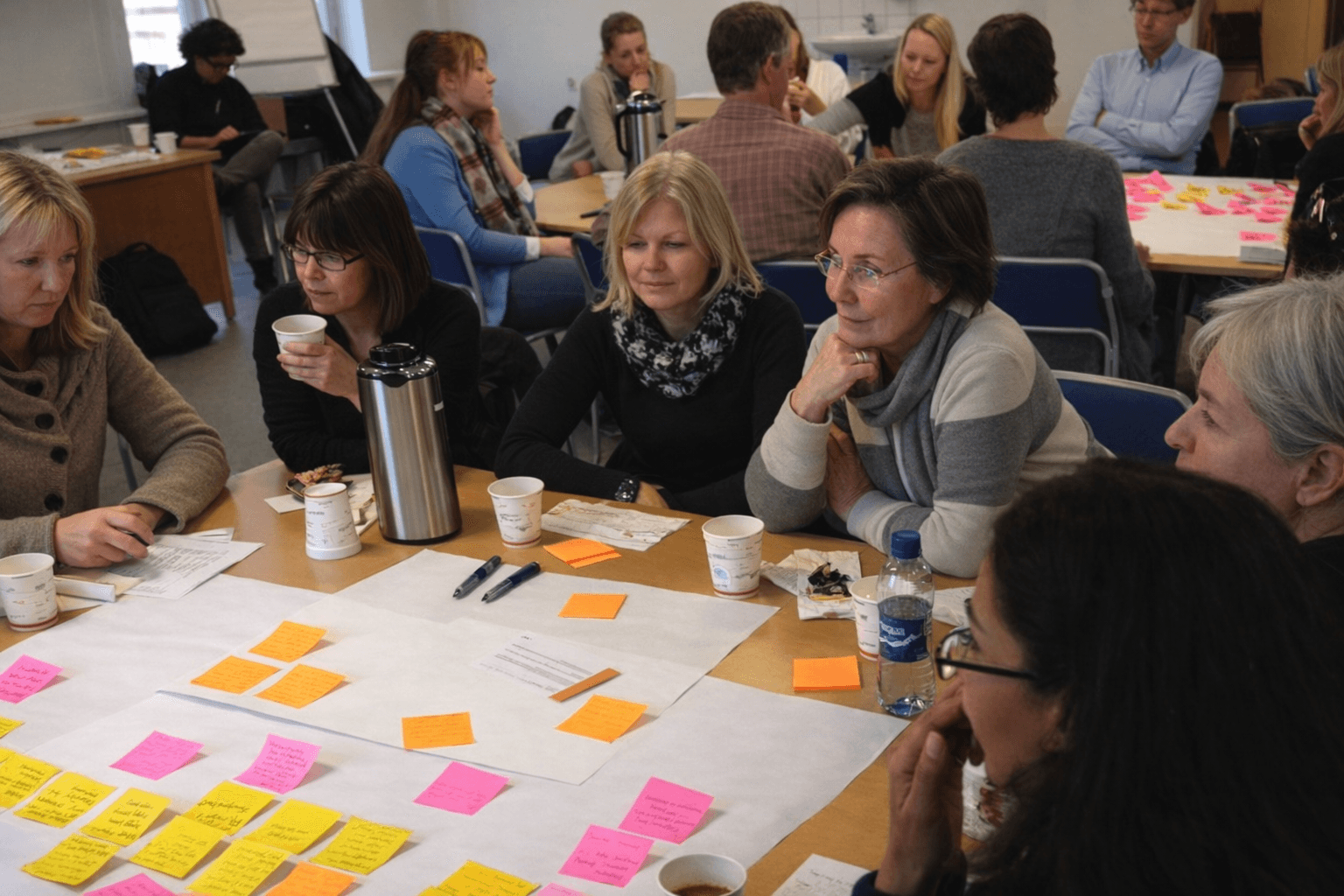
The fundamental shift occurred when we brought this insight into the room with the decision-makers. Instead of arriving with ready-made answers, we created the space, evidence, and confidence for clinicians and leaders to rethink routines they had followed for decades. Together, we redesigned the journey to work for both the system and the people moving through it.
Goal
Reduce diagnosis time while improving clarity, coordination, and patient experience.
Approach
The work combined service design activities to understand the system, align teams, and redesign the experience end-to-end.
Understand reality: interviews, observations, and research to uncover real needs and behaviours
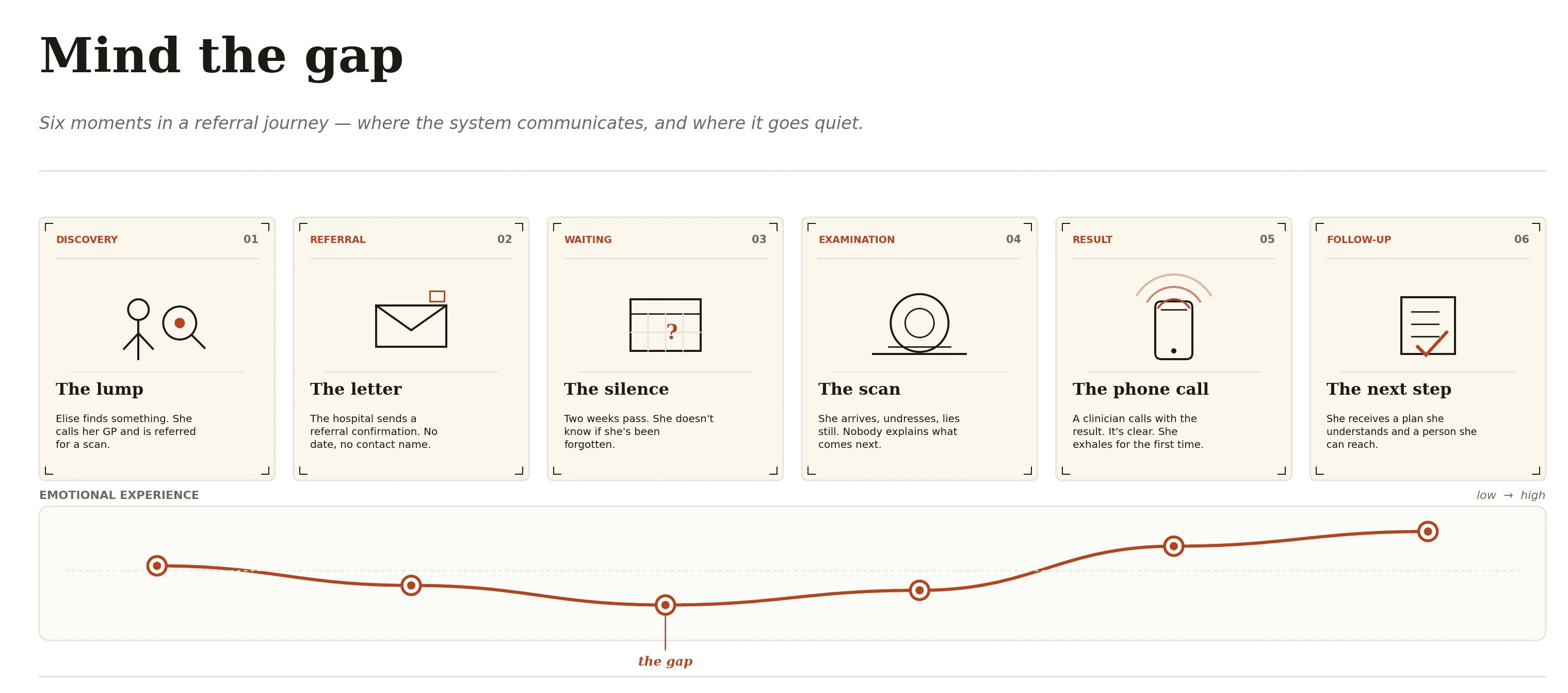
Make it visible: journey maps and service blueprints to highlight gaps and align stakeholders
Redesign the system: co-creation workshops to improve flows, handoffs, and coordination
Enable change: support implementation and adoption in real delivery contexts
Design
The experience was redesigned to align clinical processes with patient needs.
Coordination between departments was improved to reduce delays
Appointments and diagnostics were better sequenced
Communication was clearer and more timely
patients had better visibility of what would happen next
The focus was on reducing uncertainty and enabling faster, more predictable progression through the system.
Outcomes
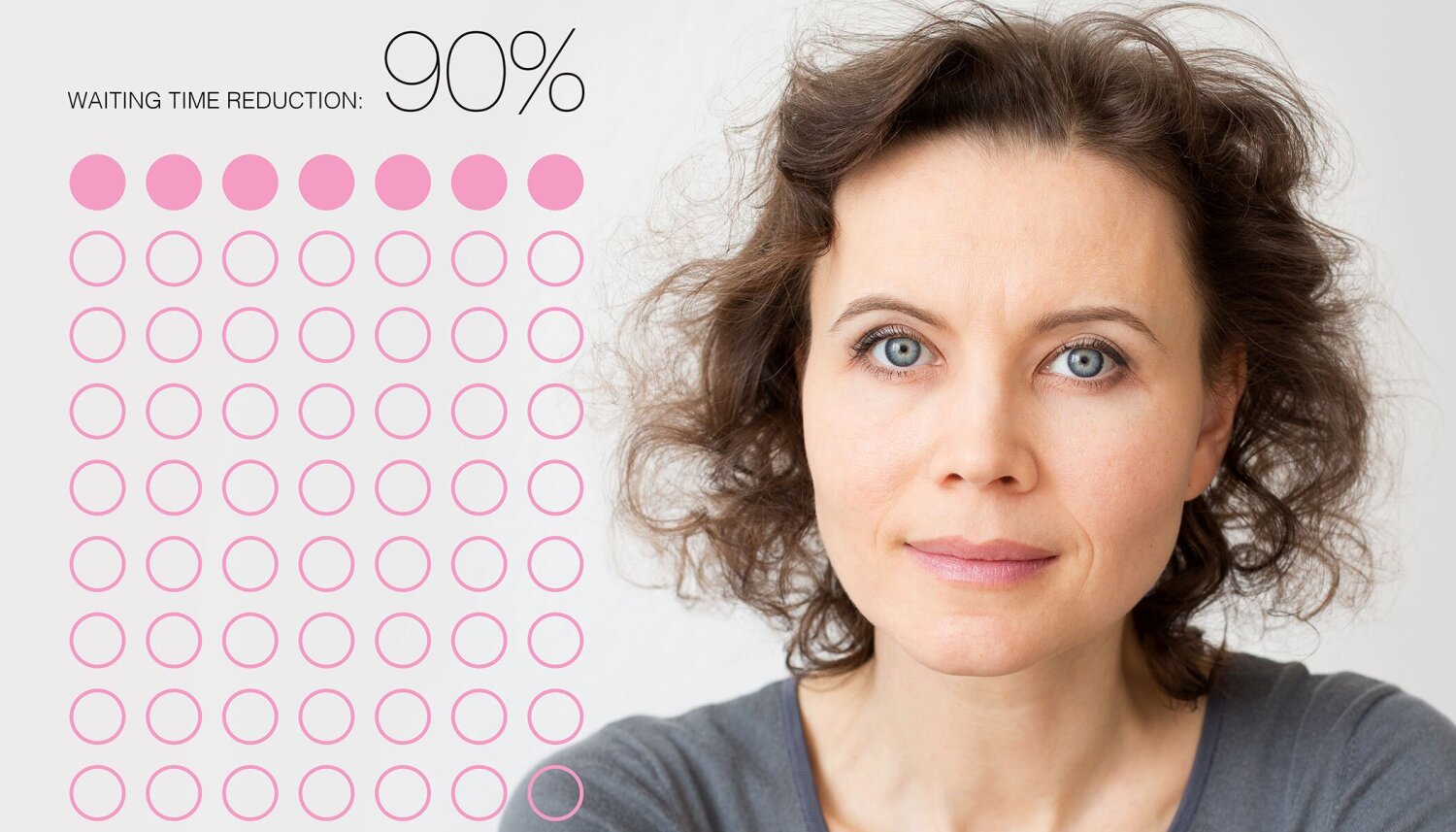
90% reduction in time to diagnosis, from up to 12 weeks to an average of 7 days
Improved patient experience through greater clarity and reduced anxiety
New diagnostic process adopted as the national standard for breast cancer (and later psychiatric treatment) in Norway
Multiple international awards and recognition, including the Norwegian Award for Design Excellence and IxDA awards
Cited by the OECD and included as a case study in This Is Service Design Doing
Why this matters
When healthcare is designed from the patient’s point of view, waiting times drop, stress is reduced, and the system works better for everyone involved.
This project became a turning point for Norwegian healthcare standards. It was award-winning, but more importantly, it showed that real innovation doesn’t start with technology; it starts with understanding people.